


How to choose a senior living community in Calgary



To choose a senior living community in Calgary, match the level of care to your parent's real day-to-day needs, then tour at least three communities and compare them on the same points: care and staffing, dining, activities, safety, the contract and fees, and how the place actually feels. On every tour, ask what the monthly fee includes and what costs extra, whether care can increase without a move, and how long the staff have worked there. Verify quality independently — confirm the community is licensed under Alberta's Supportive Living Accommodation Licensing framework, check the province's public monitoring reports, and ask whether it holds voluntary CARF accreditation. And trust what you see, hear and smell in person as much as the brochure. At an integrated community like United Active Living's Garrison Green in SW Calgary, care can grow with a resident without another move.
Choosing where a parent will live is one of the most emotional decisions a family makes — and it usually happens under time pressure, after a fall, a diagnosis, or the slow realization that home has become too much. The good news is that this is a decision you can get right by being systematic. Knowing how to choose a senior living community in Calgary comes down to matching care to need, touring in person, asking the same pointed questions everywhere, and verifying quality against Alberta's public record instead of taking the brochure's word for it.
This guide walks you through the whole process — where to begin, exactly what to ask on a tour, the sensory cues that reveal how a community really runs, how to check a community's licensing and accreditation, and the contract details that catch families out. Throughout, we use United Active Living's Garrison Green community in southwest Calgary as a worked example. There's a printable tour-day checklist at the end to carry with you.
Key takeaways
- Start by matching the level of care to your parent's day-to-day needs, then plan to tour at least three communities and score them on the same criteria.
- On a tour, get every fee, care term and increase policy in writing — and ask what triggers a move to a higher level of care.
- Use your senses: a fresh-smelling, lively community with staff who know residents by name tells you more than any glossy lobby.
- Verify quality independently — Alberta licenses and inspects supportive living accommodations and publishes the results, and CARF accreditation is a voluntary bar above the legal minimum.
- Favour an integrated community where care can grow without another move, so a changing need doesn't mean a whole new home.
Where do I start?
Start with the person, not the building. Before you book a single tour, walk through a normal day and note honestly how each of the activities of daily living is going: bathing and showering, dressing and grooming, managing medications, moving safely around the home, preparing meals, and keeping up with the house. That single exercise tells you whether you're looking for independent living (community, dining and freedom from upkeep, with no scheduled personal care), assisted living (that same community life plus daily personal-care support), or cognitive and memory support. Canada's national housing agency frames the same starting point — assess budget, location, accessibility needs and how much support is required before shortlisting a residence.1
Then set your search parameters as a family: a budget range, the parts of Calgary that keep your parent near the people and places they love, and any non-negotiables (a couple who must stay together, a pet, a ground-floor suite). With that in hand, build a shortlist and plan to tour at least three communities — comparing several is the single best way to calibrate what "good" looks like and to spot an outlier, high or low.1
Before you tour: a five-minute readiness list
- Name the care level. Independent, assisted, or cognitive support — based on the activities of daily living, not a guess.
- Set a monthly budget range. Include a buffer for care that may be added later.
- Fix the geography. Which neighbourhoods keep family, friends and familiar routines close?
- List your non-negotiables. A couple staying together, a pet, mobility access, a particular language or culture.
- Book three tours. Ideally on weekdays, around a mealtime, and never rush a single visit.
If you want to go deeper on the independent-versus-assisted question before you start, our companion guide on the difference between independent and assisted living in Alberta's continuing care system is a good primer. For most families, though, the level becomes obvious once the daily-living checklist is honest.
What questions should I ask on a tour?
A tour is a sales visit — warm, polished, and designed to impress. Your job is to gently steer it back to specifics. The strongest questions are the ones that force a concrete, written answer rather than a reassuring generality. Bring this list, and ask the same questions at every community so you can compare like with like.
Questions to ask on every tour
- Care & staffing. How are staff scheduled day and night, and how long has the current care team been here? Who assesses my parent's needs, and how often is the care plan reviewed?
- Emergencies & after-hours. How is a medical emergency handled? Is there someone awake and on site overnight? How are medications managed and administered?
- Changing needs. If my parent needs more help later, can that be added here — or does it mean moving to another floor, wing or building?
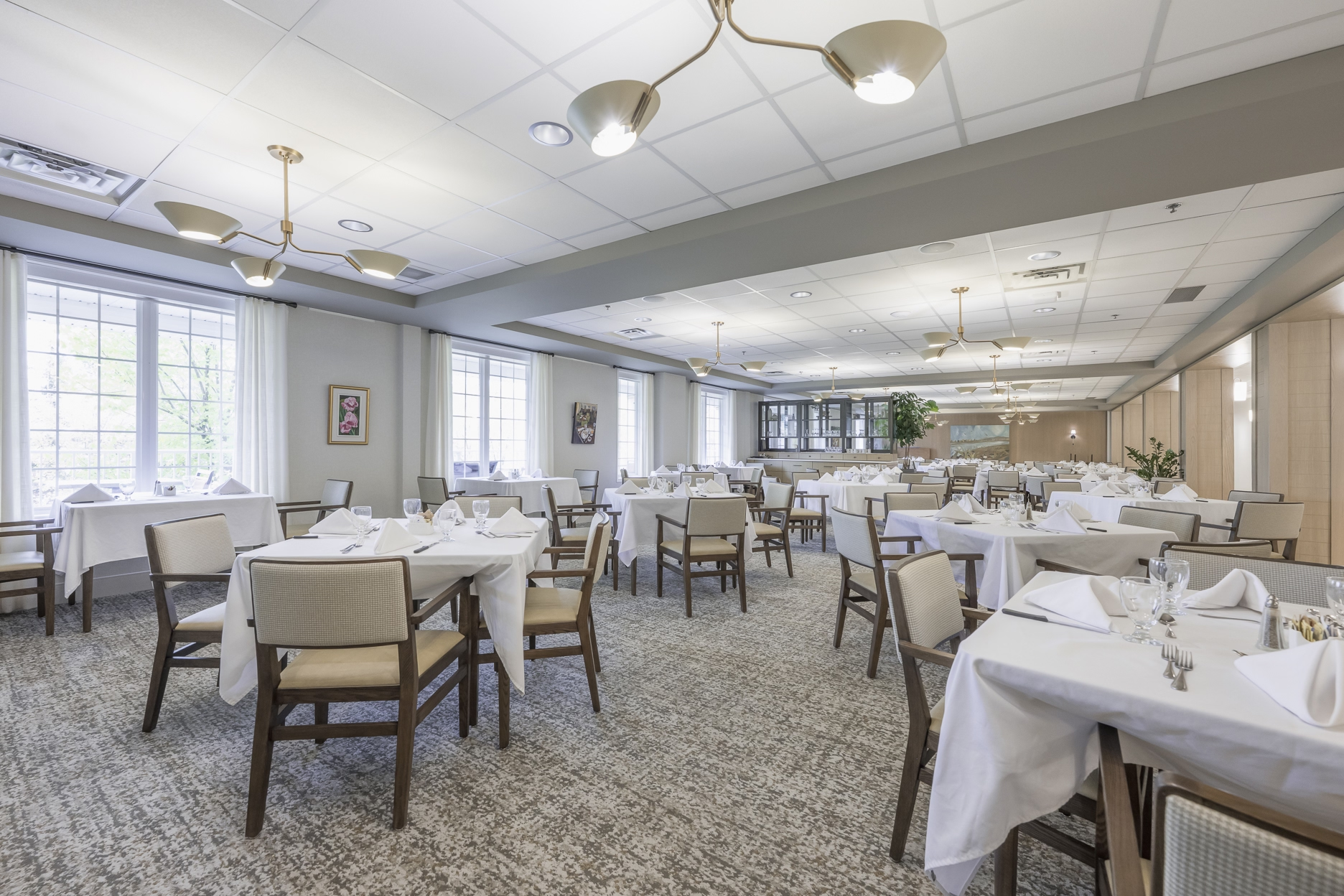
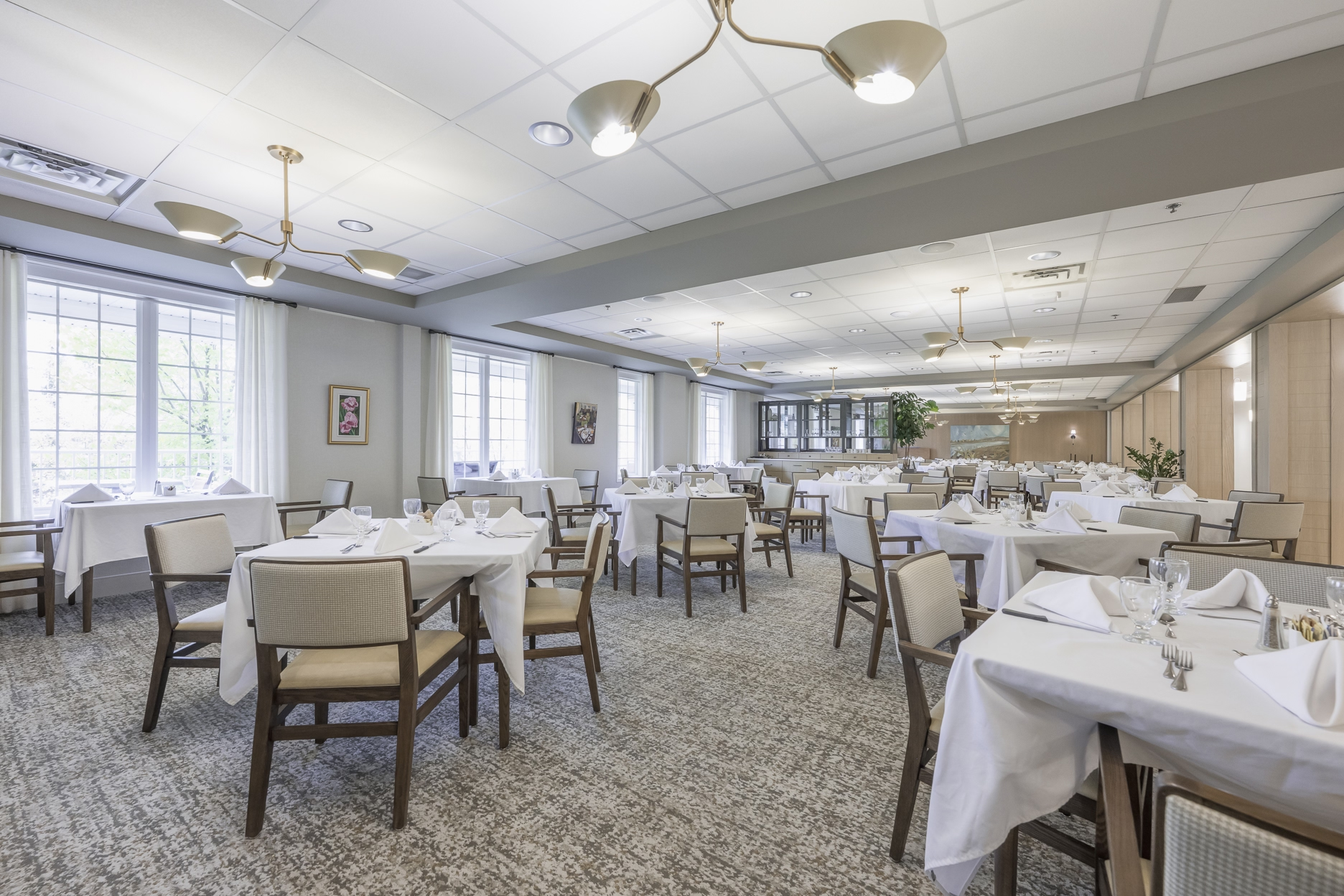
- Dining. Who prepares the food, can I see this week's menu, and may I join a meal today? How are special diets and preferences handled?
- Activities & life. May I see the real activity calendar for this month? What happens on a weekend? How do you help a new resident settle in and make friends?
- Fees & contract. What's in the monthly fee, and what is billed on top? How often, and by how much, have fees increased in recent years? What are the deposit, notice and move-out terms?
- Quality & licensing. Are you licensed under Alberta's Supportive Living Accommodation framework, and are you CARF accredited? May I see your most recent inspection or survey results?
Ask to speak with a resident or a family member who isn't on the tour route, and ask staff directly: "How long have you worked here?" Long tenure among frontline care staff is one of the most reliable signs of a well-run community — it's hard to fake and easy to check by simply asking a few people.
What should I look, listen and smell for?
Your senses are diagnostic instruments. A community can stage a beautiful lobby, but it cannot easily fake the feel of daily life on a Tuesday afternoon. As you walk the halls, deliberately slow down and take in three channels of information.
Look. Are residents up, dressed, engaged and out of their rooms — or parked in front of a television, alone? Do they look well-groomed and cared for? Notice whether staff make eye contact and greet residents (and each other) by name. Look past the show suite into ordinary corridors and a resident's actual doorway. Check for grab bars, good lighting, clear walking paths, and clean, un-worn common areas.
Listen. Is there the pleasant hum of conversation, music and laughter — or an institutional quiet punctuated by unanswered call bells? Listen to how staff speak to residents: warm and unhurried, or brisk and task-focused. When you ask a hard question, listen for a straight answer versus a practiced deflection.
Smell. This is the one families are too polite to mention, and the one that matters most. A brief cooking or cleaning smell is normal. A persistent odour of urine or heavy air-freshener masking it is a serious warning sign about hygiene and staffing. Trust your nose in the corridors, not just the entrance.

Put together, these cues sort quickly into red and green flags. Here's how to read them.
| What you notice | Red flag | Green flag |
|---|---|---|
| Smell | Persistent urine odour, or heavy air-freshener masking it | Fresh, neutral air throughout the halls, not just the lobby |
| Residents | Bored, isolated, unattended or parked in front of a TV | Up, dressed, engaged, greeted by name, out socializing |
| Staff | Rushed, can't answer questions on fees or care, high turnover | Warm, unhurried, long-tenured, know residents personally |
| Food | Repetitive, bland, no menu to show, tour avoids mealtime | Fresh menu you can see, chef on site, you're invited to taste |
| Activities | Empty or generic calendar; nothing happening when you visit | Full, varied calendar; real activity underway during the tour |
| Paperwork | Vague on pricing, reluctant to put terms in writing, pressure to sign | Transparent written fees, sample statement, no rush to commit |
How do I verify quality and licensing in Alberta?
A warm tour is necessary but not sufficient. The reassuring part of choosing in Alberta is that you don't have to rely on impressions alone — the province regulates, inspects and publicly reports on these communities, and you can check the record yourself.
Supportive Living Accommodation Licensing. Communities that provide congregate accommodation with services fall under Alberta's accommodation standards, which set minimum requirements for meals, building maintenance, security, housekeeping, social and leisure activities, and resident and family involvement — all aimed at safety, security and quality of life.2 Ask any community to confirm it is licensed, and which standards it operates under.
Public inspection and monitoring reports. This is the check most families don't know exists. Alberta's Ministry of Assisted Living and Social Services conducts monitoring visits and publishes the results for continuing care homes and supportive living accommodations, so you can look up a community's compliance history before you commit.3 Reviewing that record is one of the most powerful, and most overlooked, steps in verifying quality.
CARF accreditation — the voluntary bar above the floor. Licensing is the legal minimum. CARF International is an independent, non-profit accreditor whose aging-services standards are person-centred; earning accreditation means a community chose an in-depth, consultative on-site survey and demonstrated conformance to internationally recognized quality standards, with a Three-Year accreditation being the strongest outcome and ongoing annual conformance reporting to maintain it.4,5 Not every good community is accredited, but CARF accreditation is a meaningful signal that an outside body has examined how a community actually cares for people. United Active Living's communities, including Garrison Green, are CARF accredited.
On the tour, ask for the community's most recent inspection or survey results in writing. At home, search Alberta's public reporting for continuing care homes and supportive living accommodations,3 and confirm any CARF accreditation claim. A community proud of its record will hand these over without hesitation — reluctance is itself an answer.
What should I ask about care as needs change?
Here is the question that matters more than almost any other, because it determines whether today's good decision is still a good decision in three years: what happens when my parent needs more help? Care needs rarely stay flat. The strong preference among older Canadians is to stay put and independent for as long as possible — the National Institute on Ageing reports that around 80% of older adults want to remain in their own homes and communities as they age6 — and the right community honours that by letting support grow around the resident rather than uprooting them.
So on every tour, press on continuity of care. Ask specifically:
- If my parent needs help with bathing, medications or mobility a year from now, can that be added in this same suite?
- What change in needs would force a move to a different floor, wing or building — or out of the community altogether?
- How do you support memory and cognitive change? Are residents with dementia integrated into the community, or moved to a separate locked area?
- Who reassesses the care plan, how often, and how are we as a family involved?
- Can a couple with different care needs stay together as those needs diverge?
The reason continuity matters so much is human, not administrative: every move is disruptive, disorienting and, for someone with cognitive change, genuinely harmful. A community built around care continuity turns "we chose wrong" into "we can adjust." United Active Living's United Cares program coordinates private care alongside publicly funded Alberta Health Services home care, and its United Fitness program keeps wellness central at every level — both designed so support can scale up (or down) without a resident having to move.
What's in the contract and the fees?
The friendliest tour can still hide an unfriendly contract, so slow down here. The single most useful question about money is simple: "What, exactly, is included in the monthly fee — and what is billed on top?" Communities differ enormously in where they draw that line. Utilities, housekeeping, meals and basic recreation are often included; personal care, medication management, a second person in the suite, guest meals, and higher levels of support are frequently extra.1 Get the split in writing.
Contract and fee questions to nail down in writing
- What's included vs. extra. Get an itemized list — meals, utilities, housekeeping, laundry, recreation — and what triggers additional charges.
- Care add-on pricing. How is personal care and medication management priced, and how is the care level (and its cost) assessed and adjusted?
- Fee increases. How often do fees rise, by roughly how much in recent years, and how much notice do you give?
- Deposit & move-in costs. Is there a deposit or community fee? Is any of it refundable, and under what conditions?
- Notice & move-out. What notice is required to leave, what happens if needs exceed what you can provide, and how are refunds handled?
- The written agreement. Ask to take the residency agreement and a sample monthly statement home to read before deciding — never sign on the tour.
Any push to sign today, pay a large non-refundable deposit on the spot, or "hold the last suite" is a red flag. A reputable community will give you the written agreement to review at home and answer follow-up questions in writing. Take the paperwork, sleep on it, and compare it against the other communities on your shortlist.
Integrated vs. segregated — why does it matter?
As you compare communities, you'll notice they're built on one of two philosophies, and the difference shapes everything downstream. In a segregated model, residents are sorted by care level and moved as they change — independent residents here, assisted there, and people with dementia relocated to a separate, often locked, memory-care floor. In an integrated model, independent living, assisted living and cognitive support all coexist in one community, and support is brought to the resident instead of moving the resident to the support.
Why does this matter for a family choosing today? Because needs almost always change, and every forced move exacts a real cost — lost friendships, lost bearings, and, for someone with cognitive decline, a setback that can be hard to recover from. An integrated community absorbs change quietly: a resident adds care in the same suite, and a couple with different needs stays together.
The most stressful part of choosing senior living is the fear of choosing wrong — and having to move again. An integrated community answers that: you don't pick a level, you join a community that adjusts with you.
A principle of the social, integrated model of care
United Active Living is built on this integrated, social model of care — "done with, not for." Its cognitive-support program, United Minds, is deliberately non-segregated: residents who benefit from memory support stay part of the wider community rather than being moved to a separate locked floor. When you tour, ask directly which model a community follows — the answer tells you how a changing need will be handled years from now, and whether your family will face this whole decision again.
Your tour-day checklist
Print this and take it to every community. Score each one on the same points while your impressions are fresh, and jot notes the moment you leave — by the third tour, the details blur together. Pair it with our existing printable comparison checklist for a side-by-side scorecard across communities.
Tour-day checklist — carry this with you
- First impression. Does it smell fresh throughout? Are residents up, engaged and greeted by name? Would you want to spend an afternoon here?
- Care & staffing. Confirmed how staff are scheduled day and night, who assesses care, and how long the team has worked here.
- Emergencies. Confirmed how medical emergencies and after-hours needs are handled, and how medications are managed.
- Changing needs. Confirmed whether care can grow in the same suite, and what would force a move.
- Dining. Saw this week's menu, ideally tasted a meal, and asked how diets and preferences are handled.
- Activities. Saw the real monthly calendar and observed something actually happening during the visit.
- Fees. Got the included-vs-extra split, the fee-increase history and the deposit/notice terms in writing.
- Quality. Confirmed Alberta licensing, checked (or requested) the public inspection record, and confirmed any CARF accreditation.
- Model of care. Established whether the community is integrated or segregated — and how memory care is handled.
- The paperwork. Took the residency agreement and a sample statement home to read — did not sign on the day.
Do this at three communities and the right choice usually reveals itself — not as the fanciest lobby, but as the place where residents look genuinely at home, the numbers are transparent, the record checks out, and care can grow without another move. Consider Garrison Green in southwest Calgary — a quiet, premium community near Currie, Marda Loop, Altadore and Mount Royal University, with strong dining, a rich arts and music life, and care continuity built in. When you're ready, a short visit will usually turn a stressful unknown into a clear, workable plan.
Frequently asked questions
How do you choose a senior living community in Calgary?
Start by matching the level of care to your parent's day-to-day needs, then tour at least three communities and compare them on the same points: care and staffing, dining, activities, safety, the contract and fees, and how the place feels. On each tour, ask what the monthly fee includes and what costs extra, whether care can increase without a move, how emergencies are handled, and how long staff have worked there. Verify quality independently — confirm the community is licensed under Alberta's Supportive Living Accommodation Licensing framework, check the province's public monitoring reports, and ask whether the community holds voluntary CARF accreditation. Trust what you see, hear and smell in person as much as the brochure.
What questions should I ask on a senior living tour in Calgary?
Ask what is included in the monthly fee and what is billed on top (personal care, medication management, a second person, guest meals); how and when fees increase; whether care levels can rise without moving to another building; how staff are scheduled and how long the current team has been there; how medical emergencies and after-hours needs are handled; how the community supports memory and cognitive change; what the dining, activities and outings actually look like on a normal week; and what the notice, deposit and move-out terms are. Ask to see the written residency agreement and a sample monthly statement before you decide.
How do I verify the quality of a senior living community in Alberta?
Alberta licenses supportive living accommodations and inspects them against provincial accommodation standards covering meals, building maintenance, security, housekeeping, activities and resident and family involvement. The Ministry of Assisted Living and Social Services publishes the results of its monitoring visits for continuing care homes and supportive living accommodations, so you can check a community's public reporting before you commit. On top of the provincial floor, some communities earn CARF International accreditation, a voluntary, independent quality review that involves an in-depth on-site survey against internationally recognized, person-centred standards.
What are red flags to watch for when touring a senior living community?
Warning signs include a persistent unpleasant odour, residents who look bored, isolated or unattended, staff who cannot answer straight questions about fees or care, high staff turnover, a reluctance to put pricing or care terms in writing, empty activity calendars, tasteless or repetitive food, locked-away or segregated residents, and pressure to sign quickly or pay a large non-refundable deposit. Green flags are the opposite: residents who are engaged and greeted by name, staff who have been there for years, transparent written pricing, a full and varied activity calendar, good food residents actually enjoy, and a care model that lets support grow without a move.
Should I choose an integrated or a segregated senior living community?
In a segregated model, residents are moved to a separate wing or building — often a locked memory-care floor — as their needs change. In an integrated model, independent living, assisted living and cognitive support exist together in one community, so a resident can add care, and a couple with different needs can stay together, without another move. Because needs almost always change over time, an integrated community usually causes less disruption. United Active Living is built on this integrated, social model of care, and its United Minds cognitive-support program keeps residents part of the wider community rather than moving them to a locked floor.
Sources
- Canada Mortgage and Housing Corporation (CMHC). Housing options for seniors (comparing options; assessing needs, budget and support). cmhc-schl.gc.ca — Housing options for seniors
- Government of Alberta. Accommodation standards: supportive living accommodation (information guide) — standards for meals, maintenance, security, housekeeping, activities and resident/family involvement. open.alberta.ca — Accommodation standards guide
- Government of Alberta, Ministry of Assisted Living and Social Services. Standards, licensing and public reporting — public monitoring-visit results for continuing care homes and supportive living accommodations. standardsandlicensing.alberta.ca
- CARF International. Aging Services accreditation. carf.org/accreditation/programs/aging-services
- CARF International. Steps to accreditation — on-site survey, Three-Year accreditation outcome, and annual conformance reporting. carf.org/accreditation/steps-accreditation
- National Institute on Ageing. Ageing in the right place — the large majority of older Canadians want to remain in their own homes and communities. niageing.ca — Ageing in the Right Place
Communities where older adults live their potential
United Active Living creates community with a united approach — locally owned, integrated, and built around respect, individuality and connection. Bringing living to aging.
Ready to tour? Let's make it easy to compare.
Visit a United Active Living community, meet the care team, taste the food, and see the integrated, social model of care in person. Bring your checklist — we'll answer every question in writing, with no pressure. Just clear answers to help your family choose well.

%201.svg)


