


What makes a retirement community feel like home?
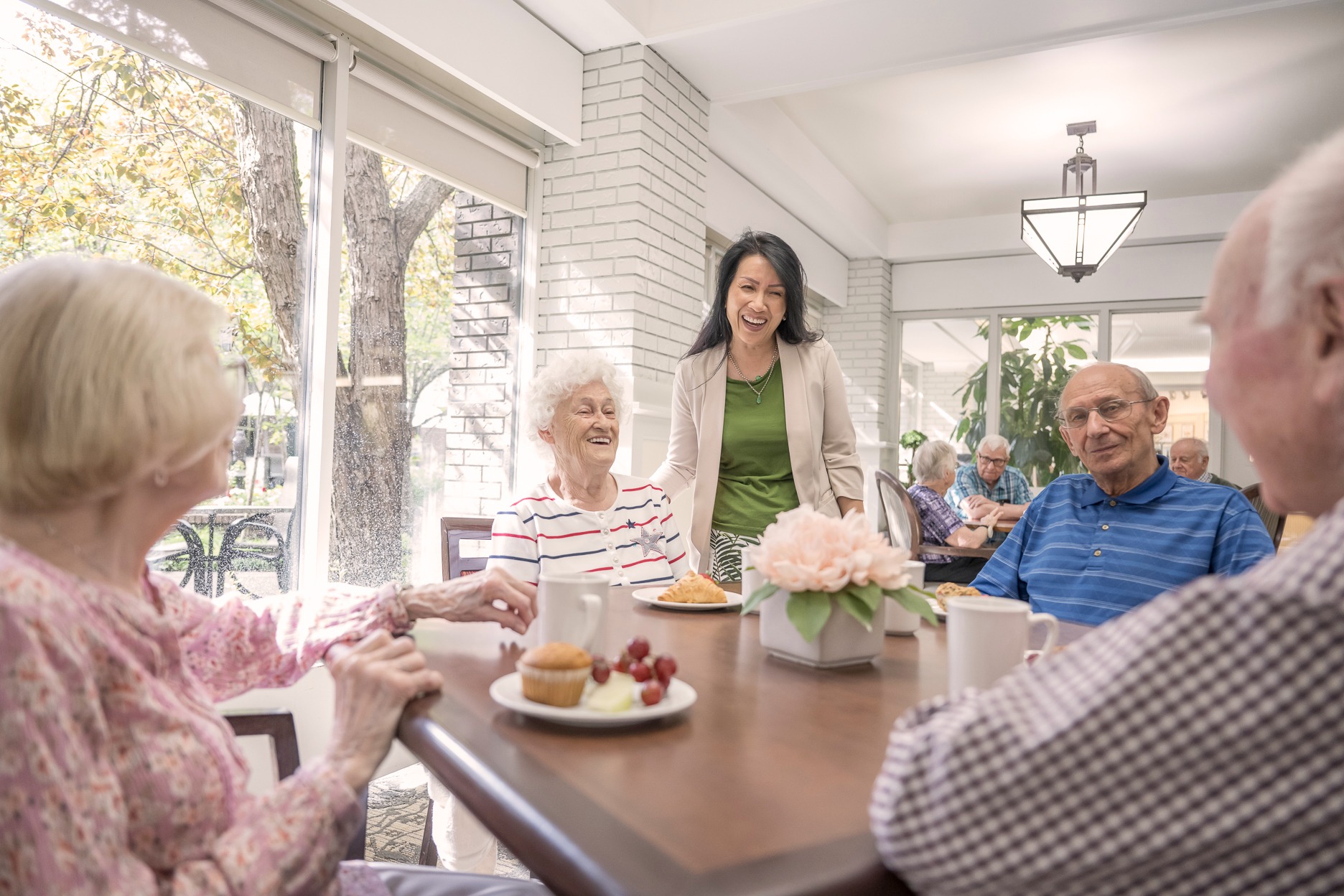


What makes a retirement community feel like home?
What does it actually mean to feel “at home”? For most people, it has little to do with square footage or amenities. It is the feeling of being known, being comfortable, of mattering to the people around you, and of waking up each morning with some sense of ownership over the day ahead.
Research from Statistics Canada shows that social isolation affects nearly one in four Canadian seniors, and the consequences are not just emotional. Chronic loneliness carries significant physical and mental health risks. Yet the right community retirement living environment does something remarkable: it reverses that trajectory entirely.
This article unpacks exactly what separates a residence that feels like home from one that simply feels like somewhere to live.
Key takeaways:
- Meaningful employee-resident relationships are the foundation of a home-like culture
- Daily autonomy, including no curfews and flexible scheduling, preserves dignity and independence
- Shared programming and creative outlets build social connection that goes deeper than proximity
- The physical and emotional environment work together to shape how welcomed people feel

Does the staff-resident relationship actually matter?
Relationships are one of the most important factors. When a caregiver remembers a resident’s grandchild's name, or a concierge greets someone by name without being prompted, the message is clear: you belong here.
At United Active Living, relationship-centred care is not a policy layer applied on top of operations. It is the operating model. Employees are selected and supported, so residents are not managing a rotating cast of unfamiliar faces every day.
This kind of gentle consistency creates the safety that allows people to settle in and feel genuinely at home.
Read more: The power of connection: Embracing community retirement living
What does daily freedom look like in senior living?
It looks like a morning that starts when you are ready, dinner that fits your appetite rather than a fixed schedule, and an evening that belongs to you. No curfews. No rigid timelines.
Many people fear that moving into a retirement residence means giving up the rhythms that have defined their lives for decades. The communities that resolve that fear are the ones that treat autonomy as a right, not a privilege.
Flexible days send a simple but powerful signal: your preferences are what matter.
How does social connection shape a retirement community?
Social connection is not automatic in shared living. It requires intentional design, shared programming, and a culture where residents feel comfortable initiating conversation rather than waiting to be included.
A residence with a strong senior community culture creates the conditions for friendship to develop organically. Common areas are inviting, events reflect what residents actually enjoy, and quieter residents are brought into the fold without pressure.
Read more: Shared spaces: The heart of modern retirement communities

How can physical spaces make a senior community feel less institutional?
Spaces that use natural light, warm materials, and residential-scale design cues communicate comfort. Spaces that prioritize clinical efficiency communicate something very different.
At Trinity Lodge, the design intention is to feel like a neighbourhood, not a care ward., Gathering and wellness spaces are woven into the daily flow rather than tucked away as optional amenities. United communities also feature art in common spaces created by the people who live there. Friendly and warm wayfinding signage alongside furniture and lighting that feels cold rather than clinical all add to the feeling of home.
Read more: What makes a great community retirement living experience?
What role does lifelong learning play for older adults?
Lifelong learning keeps identity alive at every age. When a resident takes a watercolour class, joins a lecture series, or participates in a music performance , they are not simply passing time. They are continuing to grow, and that growth is a core part of feeling like one’s self.
The evidence behind this is worth taking seriously. Studies published in journals like Psychological Science have found that engaging in mentally stimulating activities, particularly those that require acquiring new skills, is associated with stronger memory function and a greater sense of purpose in older adults. Learning is not a luxury add-on to a good life in later years. It is part of what makes later years worth living well.
Community retirement living that prioritizes intellectual and creative engagement signals something important to residents: the people who live here are still becoming, not simply waiting. That distinction changes the emotional texture of daily life in ways that are hard to quantify but impossible to miss.
At United Active Living, lifelong learning is a key pillar of community life. Outings,workshops, subject matter experts, and dynamic programming built around genuine curiosity are woven into the rhythm of each week. For families choosing a senior living community in Calgary, this is one of the most telling questions to ask on a tour: not "what activities do you offer?" but "how do you support residents in exploring their passions or learning something new?"
Read more: Class is in session
Comparing what makes a retirement community feel like home

FAQs
What is the difference between a retirement residence and a nursing home? A retirement residence prioritizes independent living and community engagement and can often be a lifestyle choice for those looking for more social connection or dynamic experiences, with care available as needed. A nursing home is structured around medical and personal care as the primary purpose.
How do I know if a retirement community is right for my parent? Look for communities where residents appear comfortable initiating conversation with team members. A culture of warmth is visible within the first visit, not just explained in a brochure.
What does "integrated living" mean in senior communities? Integrated living refers to a model where residents with varying care needs live alongside one another in shared social spaces, rather than being separated by level of need.
Is it normal to feel uncertain about moving into a retirement community? It is. Most people approach the transition with some resistance, especially if they equate community living with loss of independence. The right community addresses that directly by building independence into its way of life.
What should I look for on a tour of a retirement residence in Calgary? Notice whether employees greet residents by name, whether residents are moving freely through shared spaces, and whether the environment feels like somewhere you would want to spend an afternoon. Those details tell you more than any brochure will.
A closing thought
The fear at the centre of this question is not really about buildings or menus or programs. It is about whether a person will still feel like themselves. The retirement lifestyle in Calgary that earns real loyalty answers that question not with amenities, but with relationships, autonomy, and a culture where every resident is known and valued.
Interested in learning more? Reach out to our team to answer any questions or book a tour at your nearest community.
%201.svg)


